UK Wedding Transport Costs: Expect £1,500–£2,500 Total
UK wedding transport costs explained with local price ranges (£700–£1,200 car; £1,500–£2,500 total), a simple cost worksheet, booking timing, and vetted...
UK Wedding Transport Costs: Expect £1,500–£2,500 Total
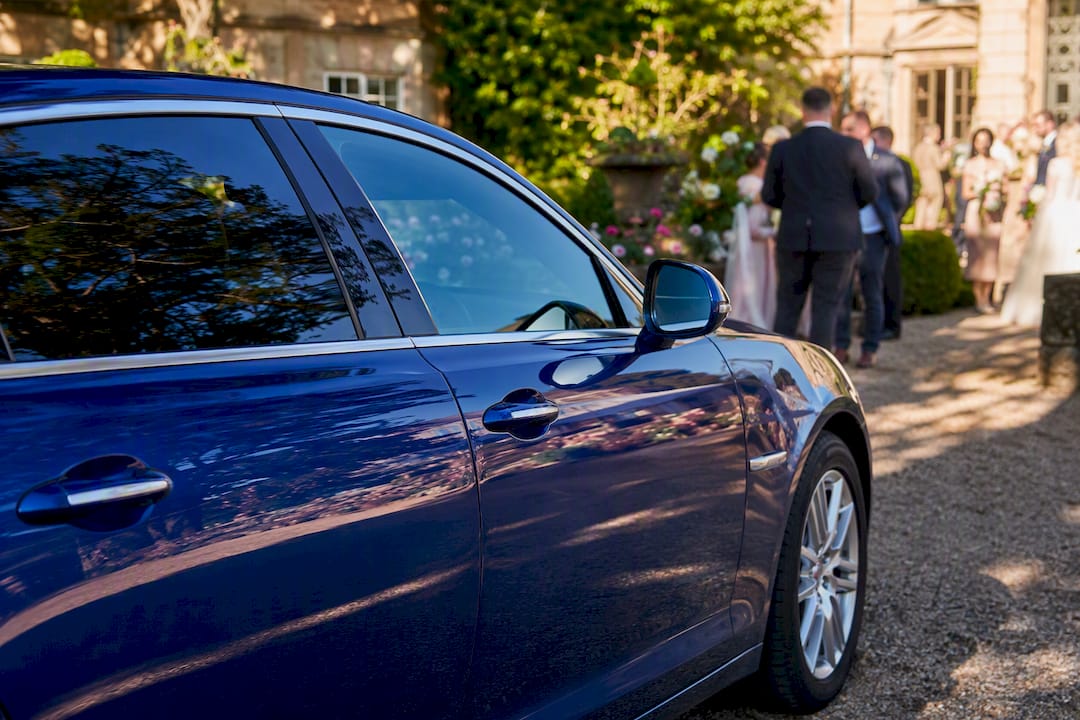
Most couples spend between £700 and £1,200 on their own wedding car, and the total transport bill often lands between £1,500 and £2,500 once guest shuttles are added. The UK average sits at around £593 for the couple’s own journey alone. A workable rule of thumb: set aside at least 2% of your total wedding budget for transport, so on a £20,000 wedding that’s roughly £400 minimum, though most couples spend more. Book your vehicles 6 to 9 months out.
TL;DR:
- Most couples spend between £700 and £1,200 on wedding transport, with total costs often rising to £1,500 to £2,500 when shuttles are included.
- Vehicle choice and duration, along with guest count, are the primary drivers of your total transport bill, with peak wedding months adding 15% to 25%.
- Booking 6 to 9 months in advance is recommended, especially for specialty vehicles, to secure better rates and availability.
- Reducing booked hours by proximity of venues and grouping guests in nearby hotels can significantly lower transport expenses.
- Confirming all costs, including gratuity and extras, upfront and scheduling based on your photographer and venue timeline prevents hidden charges.
Table of Contents
- Wedding transport cost by vehicle type
- What actually drives your total transport bill?
- Smart ways to trim your wedding transport spend
- When to book and what to ask every operator
- Why booking through a vetted marketplace matters
- The one transport mistake I see couples make every time
- Get wedding transport sorted without the guesswork
- Sources
Wedding transport cost by vehicle type
The single biggest variable in your transport budget isn’t the distance you’re travelling. It’s what you’re travelling in and for how long. A classic Rolls-Royce for two hours differs significantly in cost compared to a 50-seat coach booked for a full evening, with a substantial price gap between them.
Here’s how the main options break down, along with what each one is actually good for on the day:
- Bridal car or executive sedan: Usually quoted per hour with a 3 to 4 hour minimum booking. This covers the bride’s arrival, sometimes the groom’s, and often a quick photo stop en route. Expect this to sit at the lower end of the £200 to £750 range that WeddingWire cites for limo and bus hire generally.
- Vintage or classic car: The most expensive per hour of any option on this list, largely because there are fewer of them and they need specialist maintenance. Couples booking a 1960s Bentley or a vintage Beetle should expect a premium over a modern executive car, and availability shrinks fast in summer.
- Stretch limo or SUV limo: Popular for the bridal party rather than just the couple, since most seat 6 to 10 people. Hourly rates run higher than a standard sedan, and the 3 to 4 hour minimum still applies.
- Minibus (8 to 16 seats): The workhorse for smaller guest lists or moving the bridal party and immediate family between venues. Charged hourly with a similar minimum booking window to coaches.
- Coach (30 to 50+ seats): The most cost-effective way to move a large guest list, especially when your ceremony and reception venues are more than a short walk apart. One coach doing two or three round trips is almost always cheaper than a fleet of taxis.
- Party bus: A newer addition to UK weddings, typically hired for evening transport when guests want music and a bit of fun on the way to the afterparty rather than a quiet ride.
- Vintage trolley or bus: A niche, photogenic option mostly seen at countryside or heritage venues, priced closer to the vintage car category than a standard coach.
Put those together and the shape of your spend depends heavily on guest count. For an intimate wedding under 50 guests, many couples book just a bridal car and skip shuttles entirely, keeping total transport closer to the lower end of that £1,500 to £2,500 range, sometimes well under it. A standard wedding of 50 to 100 guests typically adds one minibus or small coach for a return airport-style shuttle between hotel and venue, pushing the total into the middle of that band. Weddings above 100 guests often need two vehicles working in rotation, or one larger coach making multiple trips, and that’s where costs climb toward £2,500 and beyond, particularly if the venue and reception site aren’t within easy walking distance of each other.
What actually drives your total transport bill?
Three numbers multiply together to produce your final invoice: how many vehicles you book, how many hours you book them for, and the hourly rate for each vehicle type. Everything else, mileage, waiting time, parking, tolls, sits on top of that base figure as extras that catch couples out if they’re not asked about upfront.

Seasonal demand moves the hourly rate itself. Book during peak wedding months or in a high-demand city and you can expect a 15% to 25% premium over the same booking in a quieter month or a less competitive region. Saturday weddings in June cost more to move than a Tuesday wedding in November, simply because every operator’s fleet is stretched thin on the same handful of dates.
A rough worksheet gets you to a realistic number fast:
- List every leg of the day: getting the couple to the ceremony, moving the bridal party, and any guest shuttle runs.
- Match each leg to a vehicle type and estimate the hours needed, rounding up to the nearest full hour and respecting the 3 to 4 hour minimum most operators apply.
- Multiply hours by the hourly rate for that vehicle, then add mileage if your venues are more than a few miles apart.
- Add a waiting-time allowance for any gap between drop-off and pickup, since idle time is rarely free.
- Sum every vehicle’s total, then add 15 to 20% for gratuity and round the whole figure up.
Pro Tip: Always ask whether the quote already includes gratuity. Some operators build in 15 to 20% automatically, others expect it added on top, and confirming this upfront avoids an awkward conversation with the driver at the end of the night.
Smart ways to trim your wedding transport spend
The single biggest lever isn’t negotiating harder on price. It’s reducing how many hours you need vehicles booked for in the first place. Every hour you shave off a booking is money back in your pocket, and most of that comes down to venue choice.
- Choose a ceremony and reception venue within walking distance, or better still the same site, and you may not need a guest shuttle at all.
- Put guests in one or two hotels close to the venue rather than scattered across town, so a single shuttle run covers everyone.
- Swap several private cars for one coach or minibus running on a rotation. It’s almost always cheaper than four separate limo bookings.
- Ask operators for packaged day-rate pricing instead of piecing together hourly bookings across multiple vehicles.
- Confirm the hourly minimum before you book. Some operators charge a 4-hour minimum even if you only need the vehicle for two.
- Push back on deadhead fees, the charge for a vehicle travelling to and from your location with no passenger aboard, since these can add £50 to £100 without you realising.
- Book an off-peak date or day of the week if your calendar allows it, since Friday and Sunday weddings often price lower than a Saturday.
- Consider decorated personal cars, borrowed from family or friends, for shorter urban routes where a licensed vehicle feels like overkill.
- For city-centre weddings with good transport links, a well-organised public transport option for guests can genuinely work, provided you communicate it clearly on the invitations.
Pro Tip: If a family member offers to drive, don’t dismiss it purely to look polished. A well-timed volunteer run to the airport or station the next morning is one of the easiest lines to cut from your transport budget entirely.
When to book and what to ask every operator
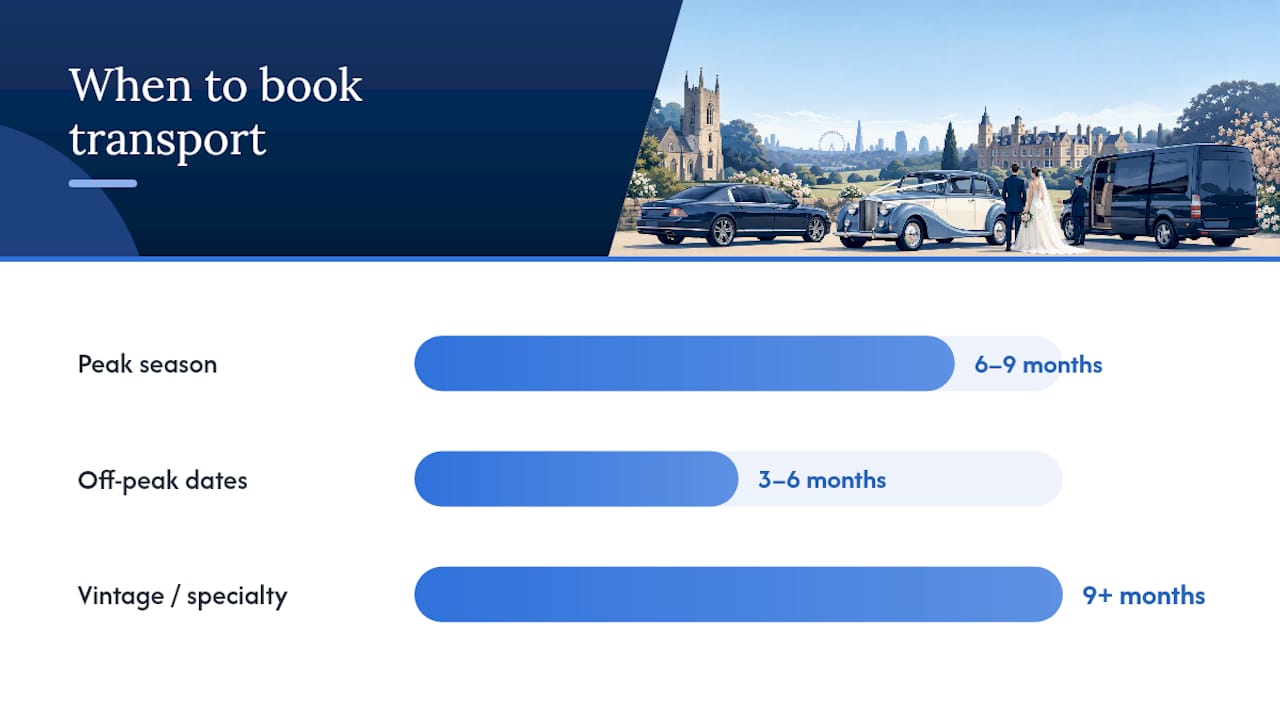
Timing matters more than most couples expect. Book 6 to 9 months ahead if your wedding falls in peak season, typically May to September and any Saturday in summer. Off-peak dates give you more breathing room, 3 to 6 months is usually fine. Vintage or specialty vehicles are the exception: with so few in circulation, 9 months or more is the safer window.
Before you sign anything, run through this checklist with the operator:
- Confirm they hold valid insurance and the correct operator licence for passenger transport.
- Ask exactly what mileage is included and whether deadhead fees apply beyond that.
- Get the waiting-time charge in writing, not just quoted verbally.
- Check the deposit amount and the cancellation policy in case your date changes.
- Clarify whether driver gratuity is included in the quote or expected separately.
- Ask what contingency exists if the vehicle breaks down or the driver is delayed.
One overlooked trick: coordinate your transport schedule with your photographer and venue coordinator before finalising booked hours. If your photographer only needs 20 minutes for car-arrival shots rather than a full hour of standing around, you can trim that vehicle’s booking window and the invoice that comes with it.
Why booking through a vetted marketplace matters
Wedding transport is one of the few big-day bookings where something going wrong is highly visible. A late minibus means a delayed ceremony in front of every guest. That’s why verification matters more here than almost anywhere else in wedding planning.
Movable connects couples with UK coach and bus operators who are fully vetted, licensed and insured before they ever appear on the platform, and the marketplace carries an average rating of 4.9 stars from thousands of customers. A few practical advantages this brings to wedding bookings specifically:
- Real-time quotes let you compare vehicle types and prices side by side instead of ringing round individually.
- Direct messaging with the operator means you can confirm mileage, waiting time and gratuity policy in writing before you pay a deposit.
- Secure deposit handling reduces the risk of losing money to an operator who cancels or underdelivers.
- 24/7 support means if a vehicle runs late or plans change the week of the wedding, there’s someone to call.
The one transport mistake I see couples make every time
Couples consistently underbudget transport because they price the car, not the day. They forget the waiting time between the ceremony and photos, the second guest shuttle run nobody planned for, the gratuity nobody asked about.
The single habit that fixes this: confirm total booked hours and a written schedule with both your transport supplier and your photographer before you sign anything. It forces every hidden hour into the open, and it’s the cheapest insurance you’ll buy all wedding. Start collecting quotes now, while your date still has options.
— George
Get wedding transport sorted without the guesswork
Movable takes the risk out of one of the trickiest bookings on your wedding list. Every coach and minibus operator on the platform is vetted, licensed and insured, so you’re not gambling on a stranger’s fleet the week of your wedding.

Instead of ringing round operators one by one, you can compare real-time quotes for minibus hire side by side, message operators directly to confirm mileage and waiting-time charges in writing, and lean on 24/7 support if anything shifts close to the day. With an average rating of 4.9 stars from thousands of bookings, Movable has already done the vetting so you don’t have to start from scratch. Head to Movable to request quotes for your wedding date and see what’s available near your venue.
Sources
- How Much Does Wedding Transport Cost? The 2026 …
- Wedding Transportation Guide: Types, Costs & Planning Tips (2026)
- Shortlist wedding transport cost guidance
- Wedding Bus and Limo Service Cost Guide | WeddingWire
Recommended
Written with BabyLoveGrowth to build your link profile