5 Things Travelers Must Confirm About Coach Toilets Before Booking
Confirm five key coach toilet details before you pay: vehicle model, toilet presence and condition, accessibility features, cleaning policy, and written...
5 Things Travelers Must Confirm About Coach Toilets Before Booking
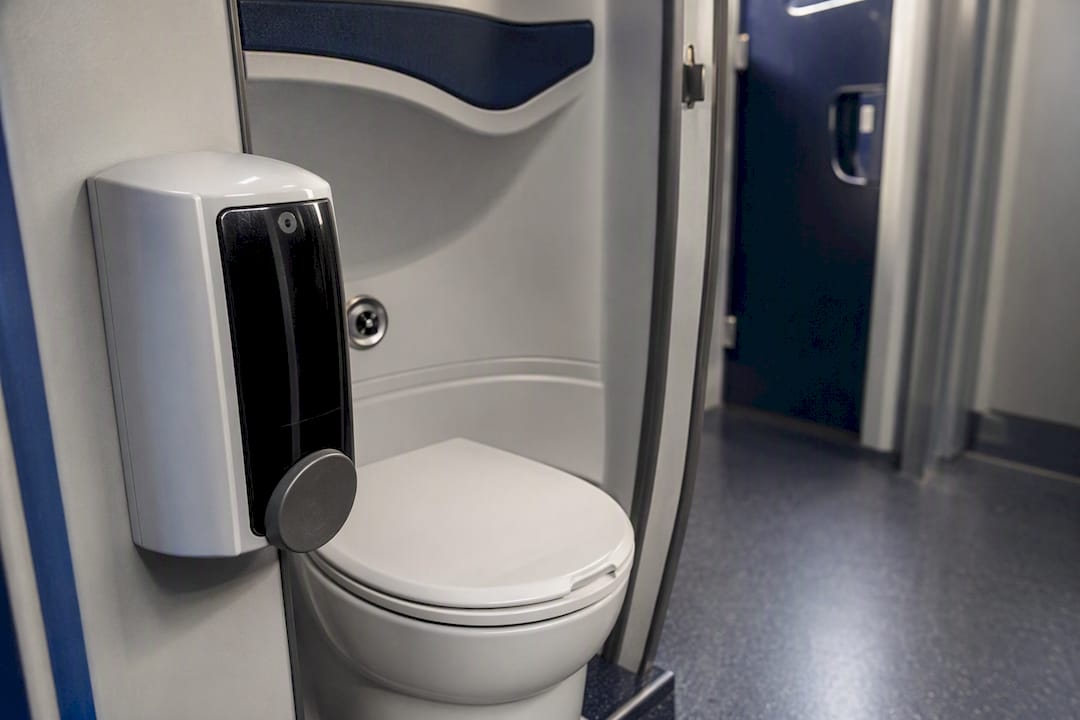
Yes: most full-size long-distance and airport-transfer coaches have a toilet, almost always fitted at the rear. Minibuses and short shuttle vehicles frequently don’t. The only way to be certain for your specific trip is to check the vehicle type or ask the operator directly when you book.
TL;DR:
- Most long-distance and airport-transfer coaches have a rear-mounted toilet, but minibuses and short shuttles often lack this feature.
- Coach toilets are self-contained systems with sealed tanks, venting, and strict restrictions on what can be flushed, making capacity a critical factor.
- It is generally safe to use coach toilets during transit with proper precautions, such as holding grab rails and keeping visits brief.
- Accessibility for wheelchair users is usually limited unless specifically requested and confirmed when booking a dedicated accessible coach.
- Confirm vehicle model, toilet functionality, and accessibility features in writing before booking, especially when using smaller vehicles without onboard toilets.
Table of Contents
- Toilets on coaches: what to expect by vehicle type
- How coach toilets actually work
- Is it safe to use the toilet while the coach is moving?
- Accessibility: can wheelchair users rely on coach toilets?
- Booking a coach with no onboard toilet: how to plan around it
- Movable’s checklist for confirming toilet availability and accessibility when you book
- A short note on courteous travel
- How Movable helps you book the right coach with confidence
- Sources
Toilets on coaches: what to expect by vehicle type
Vehicle size drives this almost entirely. Large touring coaches used for airport transfers, motorway routes, or multi-day tours generally have a rear-mounted toilet as standard fit. Minibuses, executive people-carriers, and short local shuttles usually skip it. There simply isn’t room, and on a 20-minute transfer there’s rarely a need. Operator FAQs confirm this pattern across long-distance fleets, listing the toilet alongside other standard amenities.
Once you’re aboard a coach with a toilet, here’s what’s usually inside the cubicle:
- A compact toilet bowl connected to a sealed holding system, not a flushing sewer line
- A small hand basin, or at minimum a hand sanitiser dispenser
- A lockable door with an occupied indicator
- Basic extractor ventilation to manage odour
Operators build rest stops into longer routes regularly, so the onboard toilet often serves as a backup rather than the only option. Drivers sometimes close it briefly near the end of a journey or if it needs attention. If you book through a platform that shows the assigned vehicle ahead of travel, you’ll usually see the amenities listed before you even step on board.
How coach toilets actually work
Coach toilets aren’t plumbed into anything. They run on self-contained systems, usually a sealed holding tank paired with a vacuum-flush or chemical treatment that breaks down waste and controls smell between service intervals. Manufacturer specifications show rear-mounted fibreglass cabins built specifically around these tank systems, which is why the toilet almost always sits at the back of the vehicle, furthest from the driver and nearest the access point used for emptying and cleaning.
Ventilation matters more than most passengers realise. Extractor fans and chemical treatments do the work that water flushing does on a domestic toilet, and that’s also why operators are strict about what goes down the bowl. Typical guidance includes:
- No wet wipes, nappies, or sanitary products, ever
- Minimal toilet paper use
- No attempts to flush anything solid beyond human waste
Statistic callout: Coach toilet holding tanks have a finite capacity, and heavy use over a long day, especially on routes with several short hops, can push a tank towards its limit before the scheduled cleaning stop. That’s the real reason some drivers restrict use late in a journey rather than any lack of goodwill.
Is it safe to use the toilet while the coach is moving?
Yes, it’s normally fine to use a coach toilet in transit. Coaches are built for motorway speeds and gentle cornering, and the cubicle is designed with grab rails for exactly this reason. Sensible habits make it easier:
- Hold the grab rail as you move down the aisle, especially during braking or cornering
- Lock the door properly. Occupied indicators only work if you use the latch
- Keep the visit brief. Someone else may be waiting, and tank capacity is finite
- Leave the space as you found it. Wipe the basin if you’ve splashed it
- Never flush wipes, packaging, or anything beyond paper and waste
Pro Tip: If the coach is on a winding or hilly stretch, wait a few minutes rather than fighting your way down a swaying aisle. Drivers won’t mind a short delay in a rest stop instead.
Drivers occasionally lock the toilet off completely. It might be nearly full, temporarily faulty, or the vehicle might simply be a type where the manufacturer never fitted a functioning system. If you find it closed, ask the driver rather than assuming it’s broken. There’s often a rest stop close by.
Accessibility: can wheelchair users rely on coach toilets?
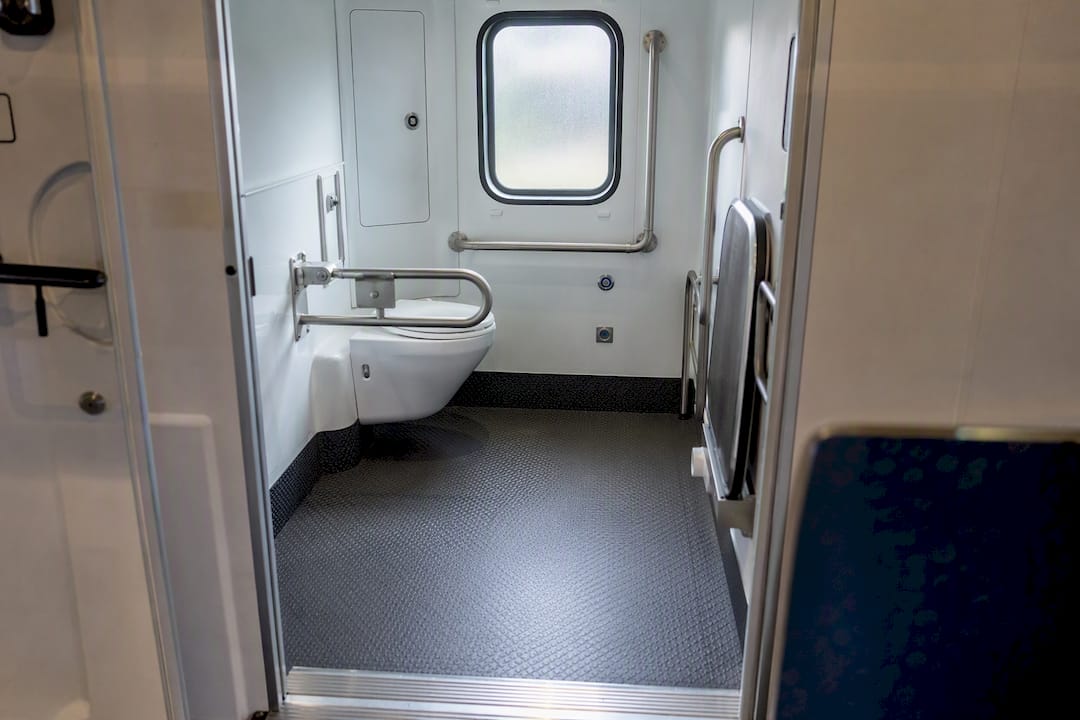
Mostly, no. Standard coach toilets are built into a small rear cabin designed to save space, not to accommodate a wheelchair or a mobility aid. Accessible toilet design requires far more floor space, wider doors, and repositioned grab rails than the typical coach cubicle offers, and most fleets simply don’t fit it as standard.
If accessibility matters for your trip, don’t assume and don’t guess:
- Ask specifically for an accessible vehicle when you book, not just “a coach with a toilet”
- Request written confirmation of the vehicle specification, including ramp or lift availability and grab rail placement
- Confirm the toilet cubicle itself is wheelchair usable, not just that the vehicle has wheelchair access generally
A dedicated accessible coach, booked and confirmed in advance, beats hoping the standard fleet vehicle will happen to work on the day.
Booking a coach with no onboard toilet: how to plan around it
If your vehicle doesn’t have a toilet, or you’re not sure yet, plan the trip around rest stops rather than leaving it to chance. Three things to sort out before you travel:
- Ask the exact questions at booking. Confirm the vehicle model, whether it has a toilet, the planned rest-stop schedule, and what happens if the toilet malfunctions mid-journey
- Build in stops roughly every 90 to 120 minutes on longer trips, which charter guides recommend as a comfortable cadence for most groups, including children and older travellers
- Pack light essentials: tissues, a small bottle of hand sanitiser, and spare water, especially useful if a stop runs later than planned
Minibuses and shuttle transfers are the vehicles most likely to skip a toilet altogether, so if you’re booking one of these for a longer trip, it’s worth checking minibus options and confirming the rest-stop plan directly with the operator before you commit.
Movable’s checklist for confirming toilet availability and accessibility when you book
Before you pay a deposit, get these five things confirmed in writing, not just implied:
- Vehicle type and model. Ask for the specific coach, not just “a coach”
- Toilet presence and condition. Confirm it’s fitted, functional, and was serviced recently
- Accessibility features, if needed: ramp, lift, cubicle dimensions, grab rails
- Cleaning and maintenance policy for the onboard facility
- Written confirmation of any special requests, kept in your booking message history
Movable vets every operator on its platform for licensing, insurance, and vehicle standards before they can take a booking, which is precisely why documented confirmation matters: you’re not relying on a verbal promise from a call centre, you’ve got it recorded against your specific journey.
A short note on courteous travel
The practical advice in this guide boils down to three habits: confirm the vehicle before you travel, plan your stops if there’s any doubt, and pack a few small essentials just in case. None of it is complicated, but skipping it is exactly how people end up stuck on a coach with no toilet and no plan.
The bit that gets overlooked is courtesy. A coach toilet is a shared, finite resource with a tank that has to last the whole journey. Keep visits short, don’t overload it with paper, and treat the next passenger’s turn as seriously as your own. It’s a small habit, but it’s the difference between a fleet that stays pleasant to travel on and one where the driver has to lock the door by lunchtime.
— George
How Movable helps you book the right coach with confidence
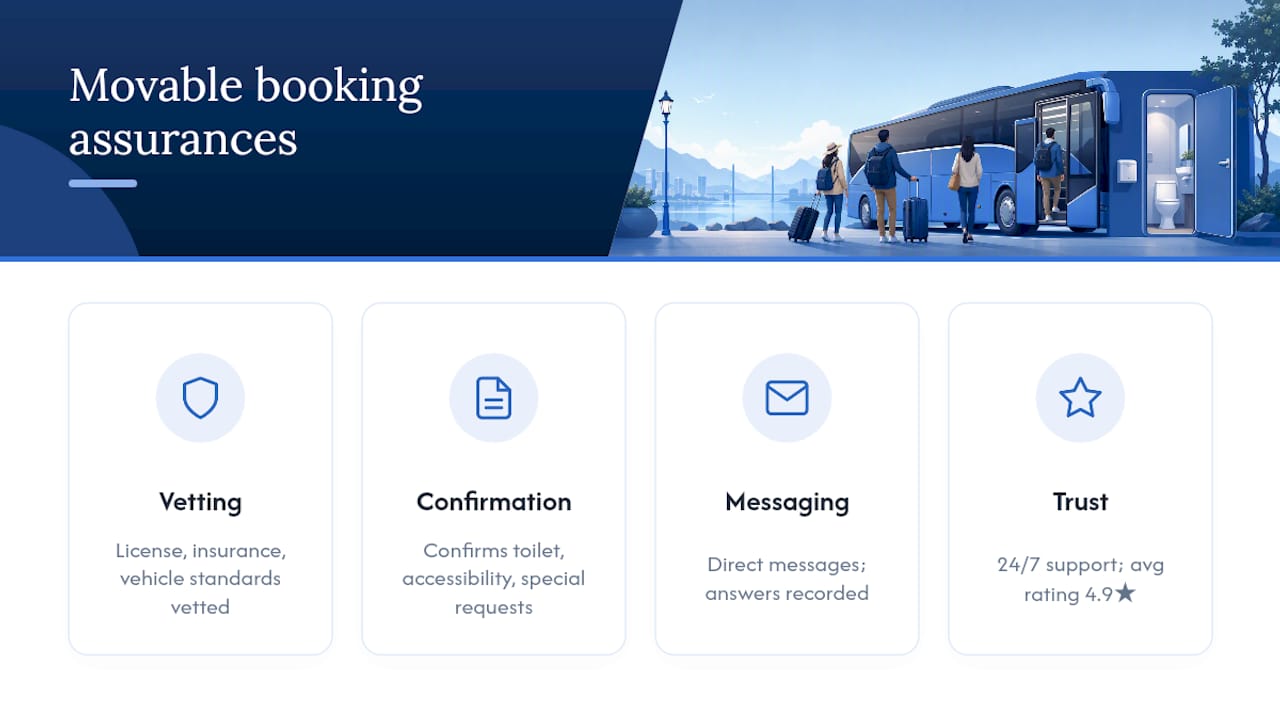
Movable exists so you’re not gambling on vehicle amenities based on a brochure photo or a hopeful phone call. Every operator on the platform is vetted for licensing, insurance, and vehicle standards before they can accept a booking, and you get written confirmation of what you’ve agreed, including toilet presence, accessibility features, and any special requests.
This matters most for group bookings, airport transfers, and any trip where accessibility isn’t optional. You message the operator directly through the platform, ask your specific questions about the vehicle, and get an answer on record rather than a verbal promise that’s hard to hold anyone to later. With 24/7 support and an average customer rating of 4.9 stars, Movable gives you a second layer of assurance beyond the operator’s own word.
If you’re planning a trip where onboard facilities matter, compare verified coach operators on Movable and confirm the exact vehicle, toilet, and accessibility details before you pay a deposit.
Sources
For further detail on the points covered here, see National Express’s own FAQ on onboard toilets, GLOVA’s coach toilet cabin specifications, MotionSpot’s guidance on accessible toilet design, and Charter Buses USA’s breakdown of which vehicles include restrooms.
- Is there a toilet on board? - FAQs - National Express
- GLOVA bus toilet models
- Designing stylish accessible toilets - MotionSpot
Recommended
- Minibus Hire with Driver | Compare UK Minibus Quotes
- How Movable Works - Simple Steps to Find Coach Hire Jobs | Complete Guide
- How to Book Coach Hire
Made with BabyLoveGrowth to strengthen website authority